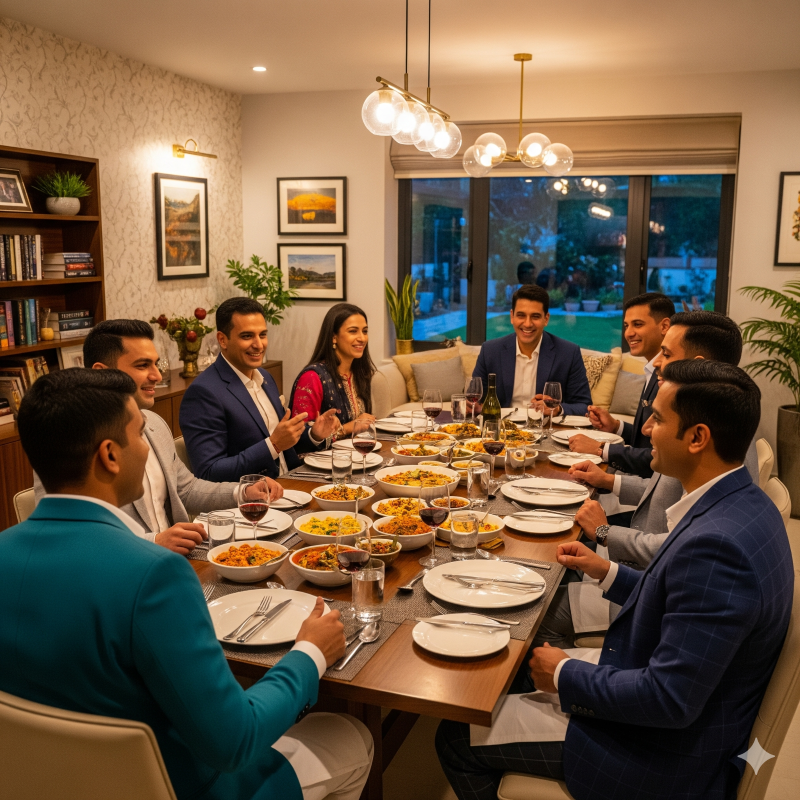
In the Army, Calling On is almost an art form — polished, courteous and wrapped in the familiar discipline of Fauji life. Shoes shine, manners sparkle, and every visit feels like a small ceremony of respect. But parallel to this formal tradition runs another one — the unofficial, wonderfully chaotic version that every Fauji family knows. It’s the one where young officers appear at your doorstep without warning and announce, with full confidence:
“Ma’am, dinner is happening here tonight!”
And just like that, your quiet evening becomes a warm, noisy, laughter-filled memory.
That night, five of them arrived — two lieutenants and three captains — with the kind of energy that only comes from youth, camaraderie and the comfort of being among your own. Even in jeans and T-shirts, their manners were unmistakably fauji. Respect in every word, affection in every glance.
As soon as they walked in, the two lieutenants declared, “Ma’am, today we are your assistant chefs!”
The seriousness with which they said it would make anyone think the Army was secretly running a culinary course somewhere between drill square and fieldcraft!
Seven people suddenly needing dinner would worry most households. But a fauji home? Never. Within minutes, a plan emerged — simple, quick and foolproof.
Eggs.
Chicken.
Rice.
And custard — because for officers, custard isn’t dessert, it’s an emotion.
One lieutenant immediately took charge of the custard. “Ma’am, this is my speciality. I’ve been perfecting it since school!”
And then came his hilarious tales of late-night raids on hostel dining halls, missing dessert bowls and the legendary boy who once drank custard straight from the serving jug.
A captain added, “So your tactical training started in the pudding section!” and the room erupted in laughter.
Another young officer attacked the egg bhurji (Indian Scrambled egg) with the intensity of a man preparing for a field exercise.
Onions flew, chillies sizzled, and someone leaned over and said,
“Your chopping looks less like cooking and more like bayonet practice!”
Cue another round of laughter — these were officers who could take a joke and give it back twice as fast.
While they played MasterChef in the kitchen, I worked on the chicken and rice. My husband, calm as ever, handled drinks in the living room, observing the chaos with the seasoned patience of a man who had survived many a tactical briefing. Compared to operations, this was easy — and guaranteed to end well.
Between the kitchen and the lounge, the evening flowed like the perfect platoon drill — noisy, cheerful, completely unplanned, yet somehow coordinated. Taste tests were performed with exaggerated seriousness. Approvals were given with dramatic nods. Someone even saluted the custard bowl.
When the food was finally ready, I turned to serve—but the officers gently stopped me.
“Not today, Ma’am. Today you sit. We’ll serve.”
It wasn’t formality.
It wasn’t protocol.
It was affection. The kind younger brothers reserve for an older sister they respect.
Dinner was wonderful.
The chicken was perfect, the rice fluffy, the bhurji spicy in all the right ways.
And then came the custard — smooth, golden, with the lieutenant’s proud grin shining brighter than the dessert.
“You deserve a mess toast for this,” a captain declared.
“Maybe even a medal,” another joked.
We laughed. And we ate. And we felt what the Army does best — it turns people from different corners of the country into one family.
Today, so much happens through messages and RSVPs. Dinners are planned, menus pre-decided, calendars coordinated.
But the evenings I cherish most were these unplanned ones — when young officers walked into our home with no agenda except warmth, food and laughter. They filled the rooms with joy, left the kitchen looking like a minor war zone and departed with a perfect bowl of custard as the unofficial seal of tradition.
Seven plates. No plan.
Just the Fauji way.
Have a Story to Share?
Do you want to share any interesting incident or anecdote about life in the Indian Armed Forces?
Thank you for reading this story on Fauji Tales.
If it moved you, inspired you, or reminded you of someone who has worn the uniform with pride, please share it with others.
Acknowledgement – I read this story in one of the Fauji WhatsApp groups. No name of the author was mentioned in the forward
Well written.
Thank you sir
Beautiful illustration of fauji life style. Simple but interesting language has generated interest to go through the entire article in one go. Great work done by Capt. Poorna. Your hard work appreciated.
Thanks Capt Baig.
The fondness of the memory, with which this article is written, comes through to the reader. Keep up the good work.