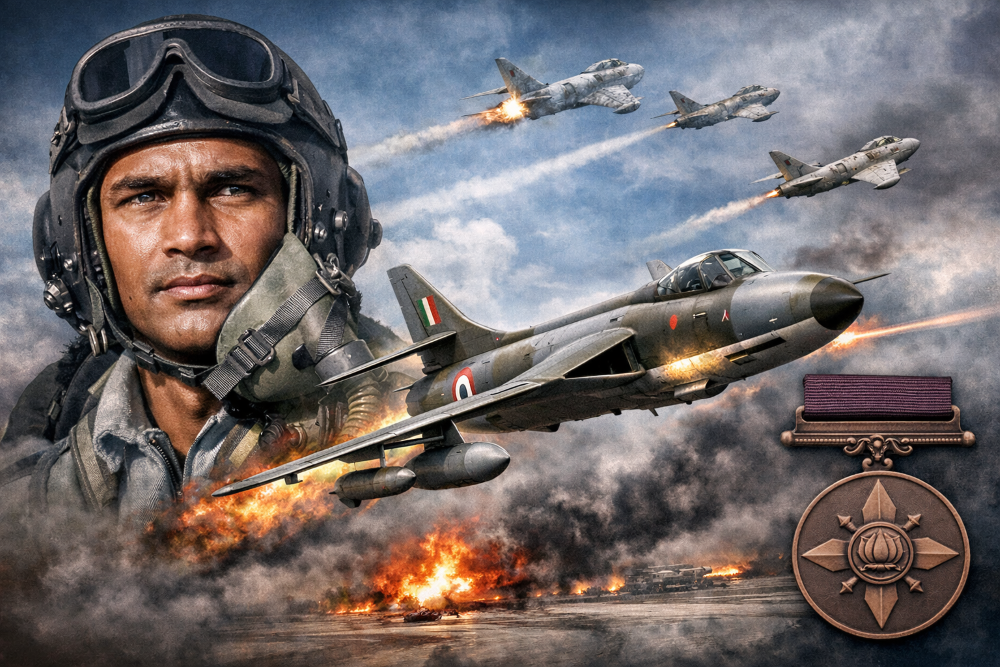
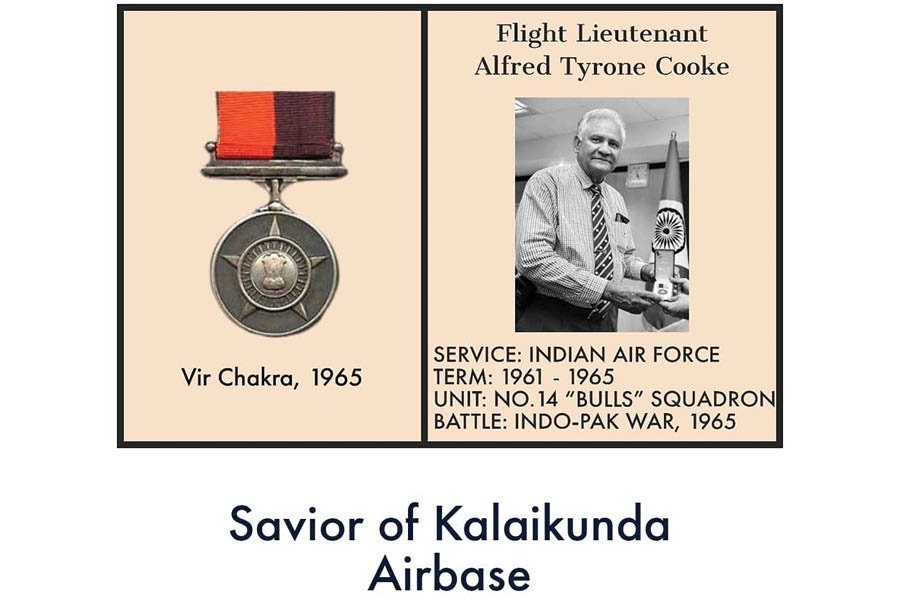
In the Indian Air Force, some names smell of aviation fuel and hot metal. Some names sound like the whine of a jet engine at full throttle. And then there is one name the Bulls of No. 14 Squadron still say softly, with a smile: “Cookey.” – Flt Lt Alfred Cooke at Kalaikunda
This is not just a story of air combat.
It is the story of a man who flew so low he became a gardener, fought with practice ammunition and empty guns, and believed medals belong to squadrons—not men.
The Morning the Sky Broke
7 September 1965 was not meant to be legendary.
It was meant to be desperate.
The Pakistan Air Force had already struck Kalaikunda Air Force Station, catching Indian Canberras and Vampires on the ground. Smoke hung over the base. Aircraft burned where they stood.
Kalaikunda had no margin left.
Up in the blue, flying Combat Air Patrol, were two Hunters—the Red formation.
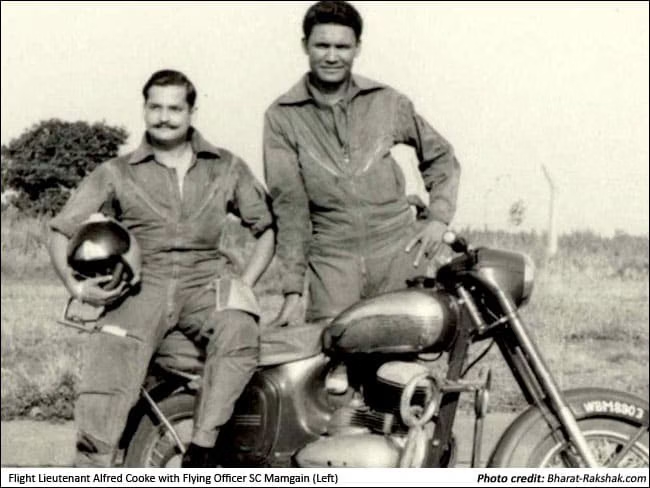
Alfred Tyrone Cooke and his wingman, Flying Officer S.C. Mamgain.
They were the last line of defence.
Then radar crackled again.
Four PAF F-86 Sabres—diving in for a second, killing pass.
Cookey didn’t wait for instructions. He keyed the mic, voice raw with anger:
“Look at those bastards! They think they have won the war. Let’s get them!”
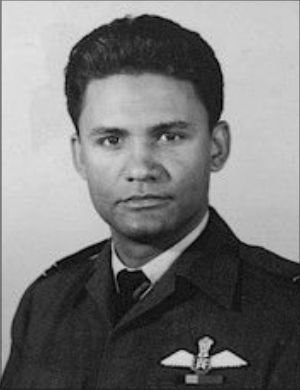
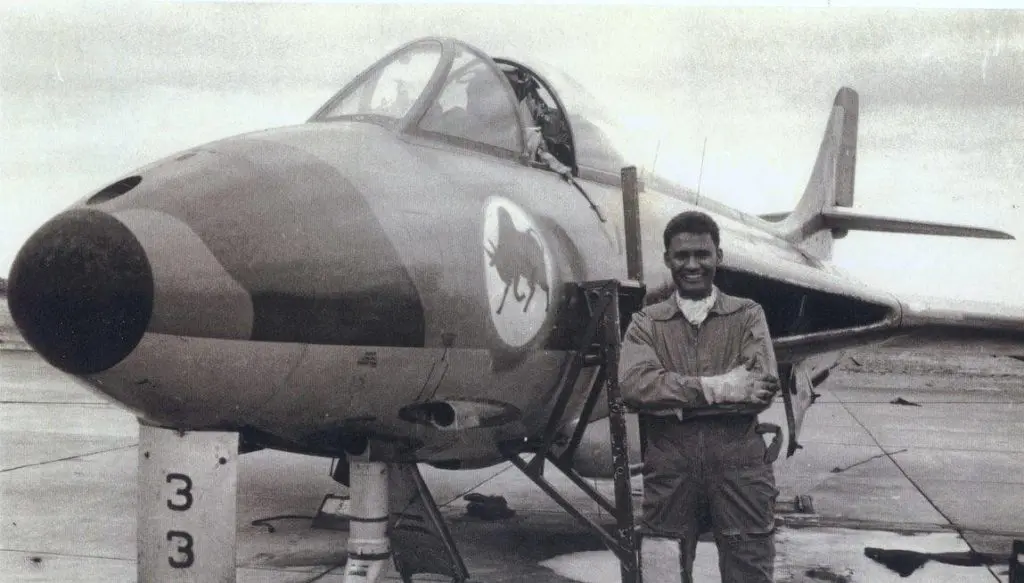
Breaking the Rulebook: Flt Lt Alfred Cooke at Kalaikunda
Every manual says the same thing:
Never split a pair. Never fight alone.
Cookey watched the Sabres split to strafe the airfield. If he stayed high, Kalaikunda was finished.
He ordered Mamgain to take top cover—and then dove alone into the hornet’s nest.
This wasn’t a gentleman’s duel.
It was a knife fight in the sky.
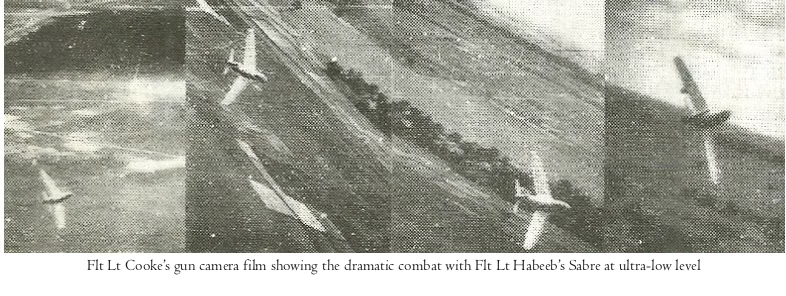
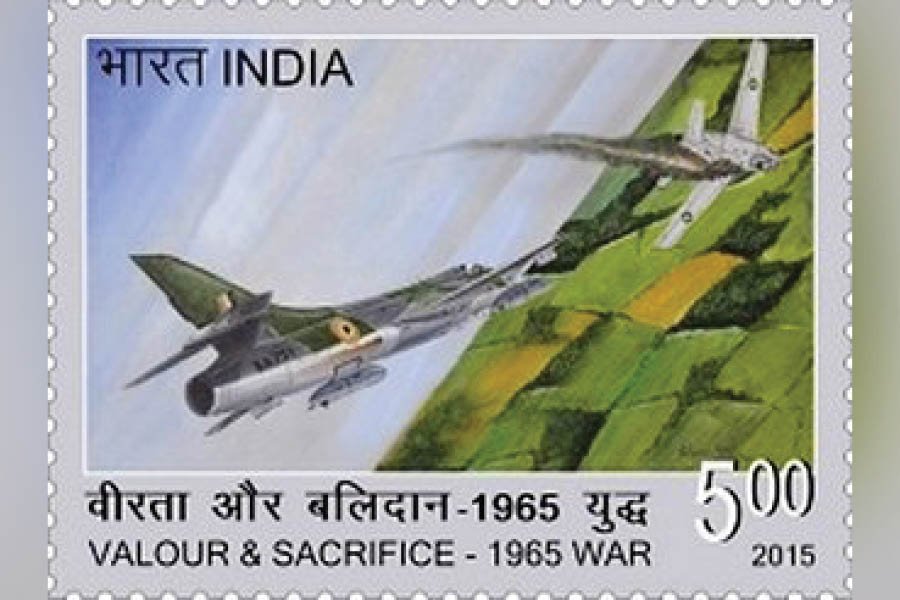
Cookey latched onto the lead Sabre, flown by Flt Lt Afzal Khan. The fight went lower… and lower… until they were skimming trees.
His mentor, the legendary Piloo Kacker, had taught him one thing:
“Don’t fly the dials, Cookey. Fly the jet.”
At over 500 knots, Cookey clipped bushes with his wingtip. When he fired, the Sabre exploded—and Cookey flew straight through the fireball.
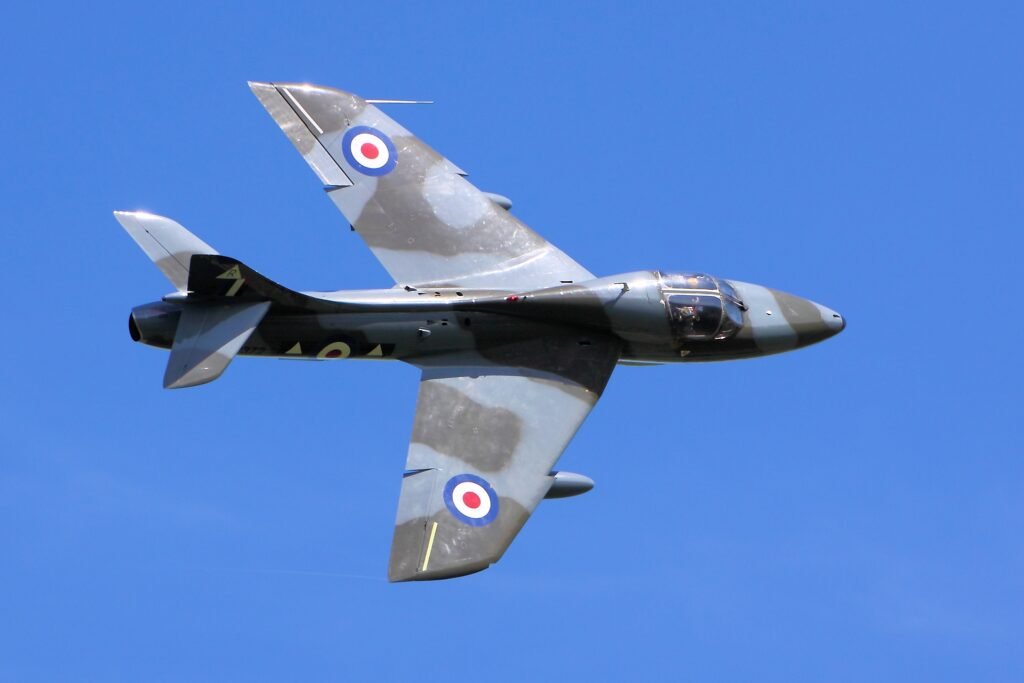
The Gardener of Kalaikunda
When Cookey landed later, the ground crew fell silent.
Twigs. Leaves. Scrub.
Embedded in the leading edge of his Hawker Hunter.
He hadn’t just fought the enemy.
He had mowed the battlefield.
Practice Ammo. Real Consequences.
Here’s what most official histories miss.
In the chaos of the scramble, Cookey’s Hunter had been loaded with 30mm practice ball ammunition—solid slugs, no explosives.
That meant no single lethal hit.
To down a jet, he had to physically tear it apart.
He engaged the second Sabre—Flt Lt Tariq Habib—and riddled it until panels flew off like metal leaves.
This wasn’t shooting.
This was precision brutality under impossible odds.
Empty Guns, Full Fury
By the time Cookey turned toward the fourth Sabre:
- His guns were empty
- Fuel was in the red
- Airspeed indicator was dead
Then he saw the last Sabre lining up behind Mamgain.
Most pilots would disengage.
Cookey dove.
With empty guns, he attacked so aggressively—so convincingly—that the Pakistani pilot believed he was about to be rammed.
The Sabre broke.
And ran.
Later, the PAF official report claimed nine Indian Hunters had attacked them.
They didn’t see nine aircraft.
They saw one man fighting like nine.
Paans, Not Celebration
Cookey didn’t celebrate.
Mamgain later recalled that he was shaken. He had seen another man die through his gunsight—close enough to feel it.
To calm the squadron, Cookey did something profoundly Indian.
He brought paans.
Not whisky.
Not boasting.
Just brotherhood.
Years later, Mamgain—whose life had been saved by an empty-gun bluff—gifted Cookey a Gurkha Kukri, the ultimate symbol of warrior respect.
Why He Deserved the Param Vir Chakra
Military Historians think that by any objective measure, Alfred Cooke’s action met the highest standard of gallantry.
On a single mission, he:
- Engaged four enemy fighters alone
- Flew below tree-top level
- Continued combat after losing airspeed indication
- Fought with practice ammunition
- Protected his wingman with empty guns
- Saved an entire operational airbase
This was not a single act of bravery.
It was sustained, conscious heroism under impossible odds.
Across the world, nations have shown it is never too late to correct history.
Decades after the Vietnam War, Joe Biden awarded the Medal of Honour—America’s highest military decoration—posthumously to a soldier whose courage had gone unrecognised for over fifty years in the Vietnam War.
It was not politics.
It was moral clarity.
Many military historians believe Cookey’s action deserved India’s highest gallantry award for the same reason: He saved lives, changed the outcome, and asked for nothing in return.
Cookey never fought for medals.
But history has a responsibility—to recognise courage accurately, even if belatedly.
The Man Who Gave His Medal Back
Cookey later moved to Australia, but Kalaikunda never left him.
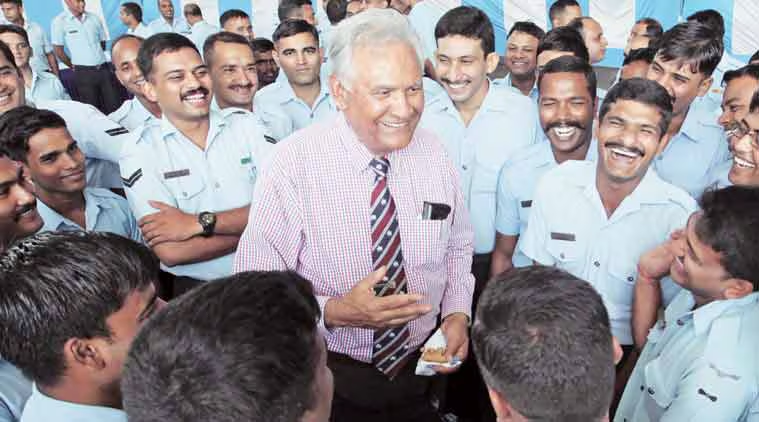
In 2015, he returned to Ambala and did something extraordinary: he returned his Vir Chakra to No. 14 Squadron.
“The medal belongs to the Bulls,” he said. “Not to me.”
In 2023, at 83, standing once more on the Kalaikunda tarmac, he made a final request:
“When my time comes, scatter my ashes here.
Let me become part of the soil I defended.”
Why Fauji Tales Remembers
Alfred Tyrone Cooke wasn’t just a pilot with a kill.
He was a leader who broke the rulebook to save his base.
A warrior who fought with practice ammo and empty guns.
And a man who never forgot the value of paans and brotherhood.
Machines change.
Men like Cookey don’t.
Because in the end, it’s not the Hunter that wins the war— it’s the Bull inside it.
These are the stories Echoes of Bravery is made of!
Have a story to share?
Every Fauji carries memories — inspiring, humorous, and deeply personal.
This is your space to share them with the world. If you or someone you know has lived life in uniform, we invite you to contribute to Fauji Tales.
Thank you for reading this story on Fauji Tales.
If it moved you, inspired you, or reminded you of someone who has worn the uniform with pride, please share it with others.
Such soul stirring stories of bravery, commitment and patriotism. God bless each of these heroes n their families. Gratitude for collecting, collating and presenting them so beautifully for us.
Thanks Sumana. Pls do share among your friends.
Best regards,
Poorna
I just finished reading Tales of a Fauji, and I’m genuinely so impressed. The way you articulated the emotions, sacrifices, and silent strength of a soldier felt so real and powerful. You’ve written it with so much depth and respect.
So proud of you for bringing such stories to life.
Thanks Ajana. Pls do share it among your friends.
Best regards.
Poorna