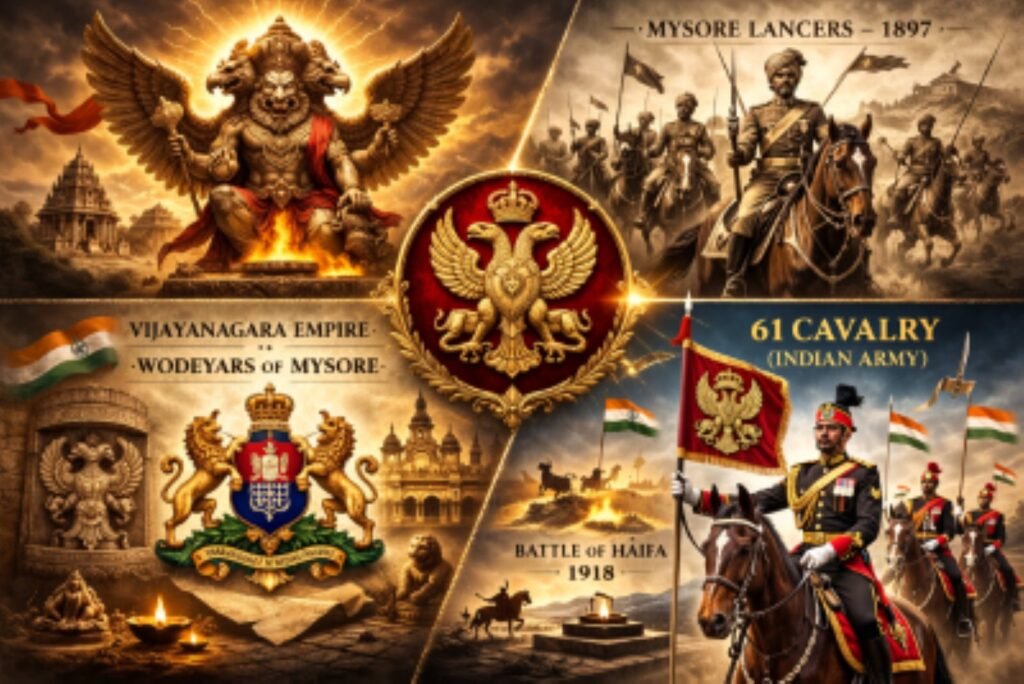
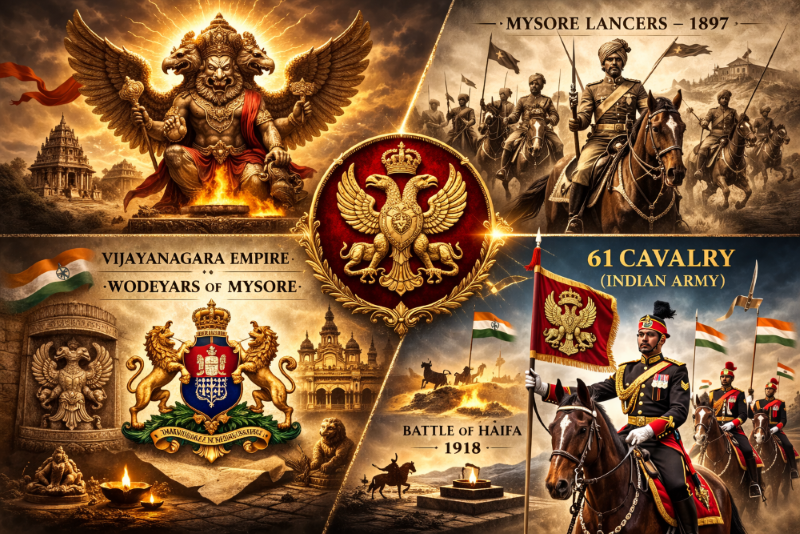
Did you know that the official emblem of the Karnataka government—and an emblem worn by an Indian Army regiment—depicts a mythical creature said to be powerful enough to hunt lions and carry away elephants? This is the story of Ganda Berunda and the Indian Army!
Look closely, and you will find the Ganda Berunda, the fearsome two-headed bird. While many associate it with the Vijayanagara kings or the Mysore Wodeyars, the symbol is actually far older. Evidence suggests that versions of this emblem were already known in Karnataka during the time of the early Kadamba rulers of Banavasi (4th–6th century CE), long before the rise of the great medieval empires.
It is neither eagle nor hawk.
It is something older than kingdoms.
And its journey—from mythological imagination to royal authority, and finally to military tradition—is one of the most remarkable continuities in Indian symbolism.
Today, it appears on the insignia of 61st Cavalry.
To understand why, we must travel across legends, empires, and battlefields.
The Myth: When the Universe Trembled
The story begins with an imbalance.
After slaying the demon Hiranyakashipu, Lord Vishnu’s Narasimha avatara could not restrain his fury. Creation itself trembled. To contain him, Lord Shiva manifested as Sharabha, a powerful lion-bird hybrid.
But even this was not enough.
In a final transformation, Narasimha assumed an even more terrible form—the Ganda Berunda.
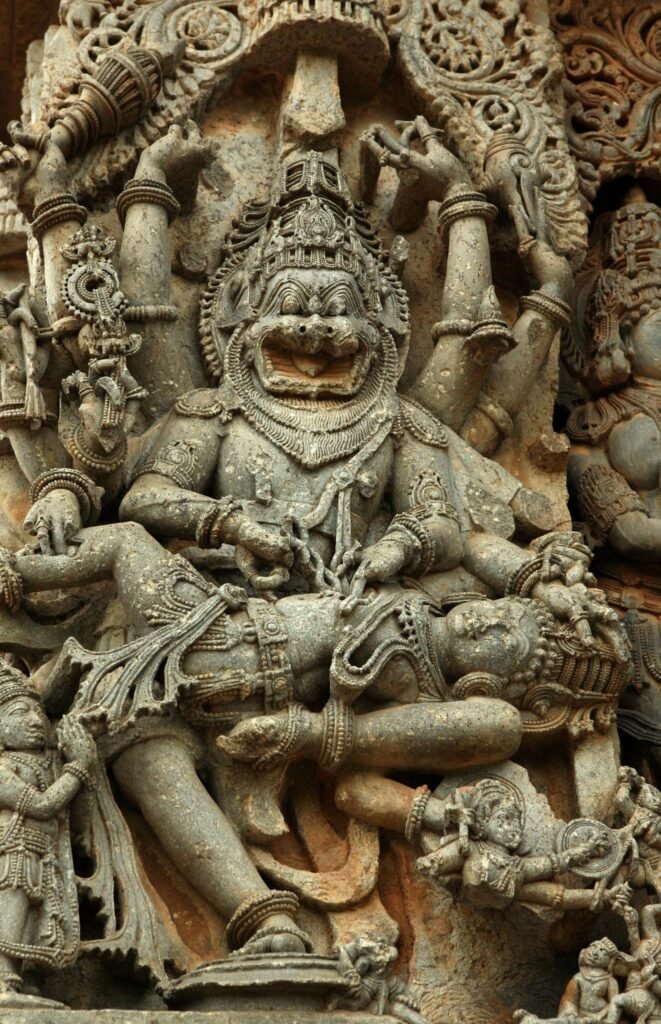
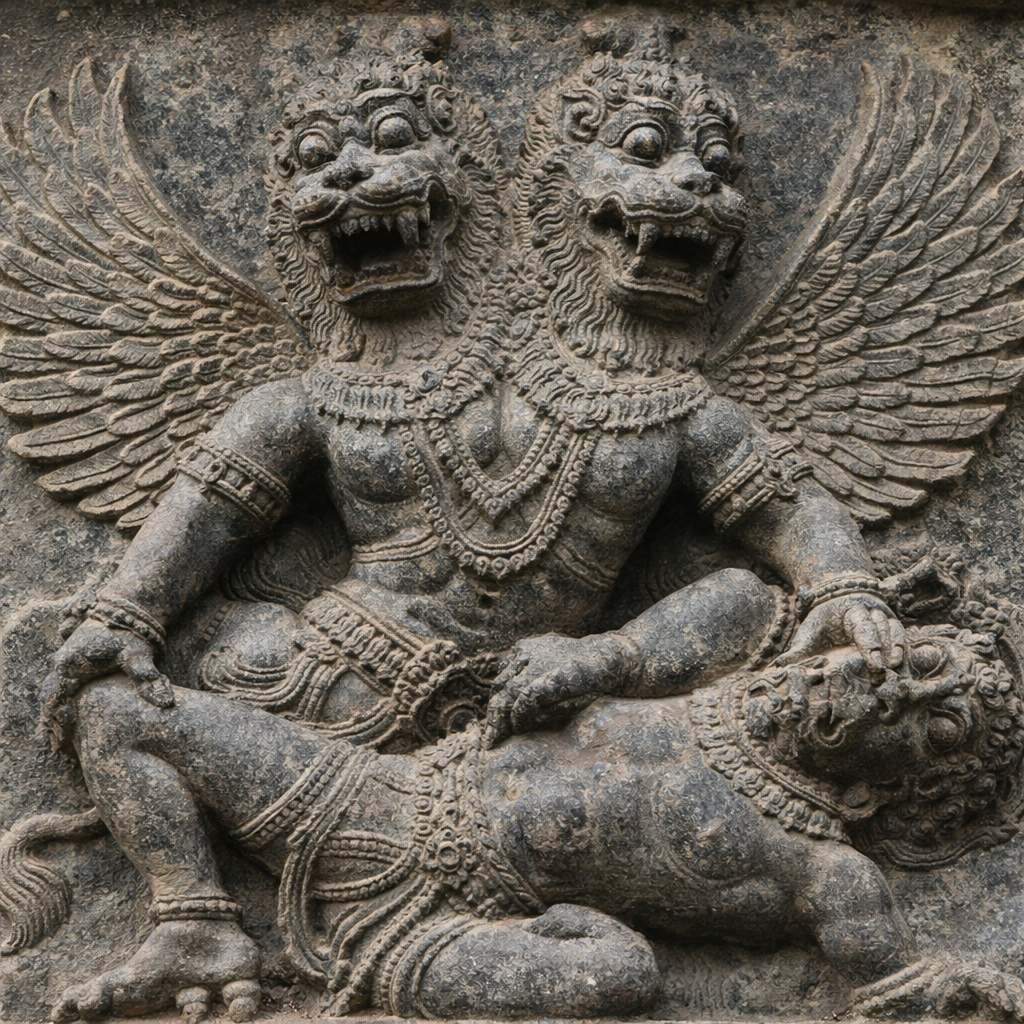
With two heads to watch every horizon and strength that surpassed even divine beings, the creature restored cosmic balance. It became the ultimate symbol of ugra shakti—terrible, overwhelming power—used in the service of dharma.
In temple iconography, such as the famed Bherundeshvara pillar at Balligavi, the Ganda Berunda appears as the final link in a “chain of destruction”:
The predator that stands above all others.
From Myth to Motif: A Symbol That Travelled Across Civilisations
Scholarly research shows that the Ganda Berunda did not emerge suddenly as a fully formed emblem, but represents the culmination of a symbol that evolved across cultures and centuries. Dr. S. Srikanta Sastri traces its origins to the ancient winged sun-disc associated with the Tree of Life, seen in Egyptian, Assyrian, and Hittite monuments, where it functioned primarily as a fertility and sovereignty symbol.
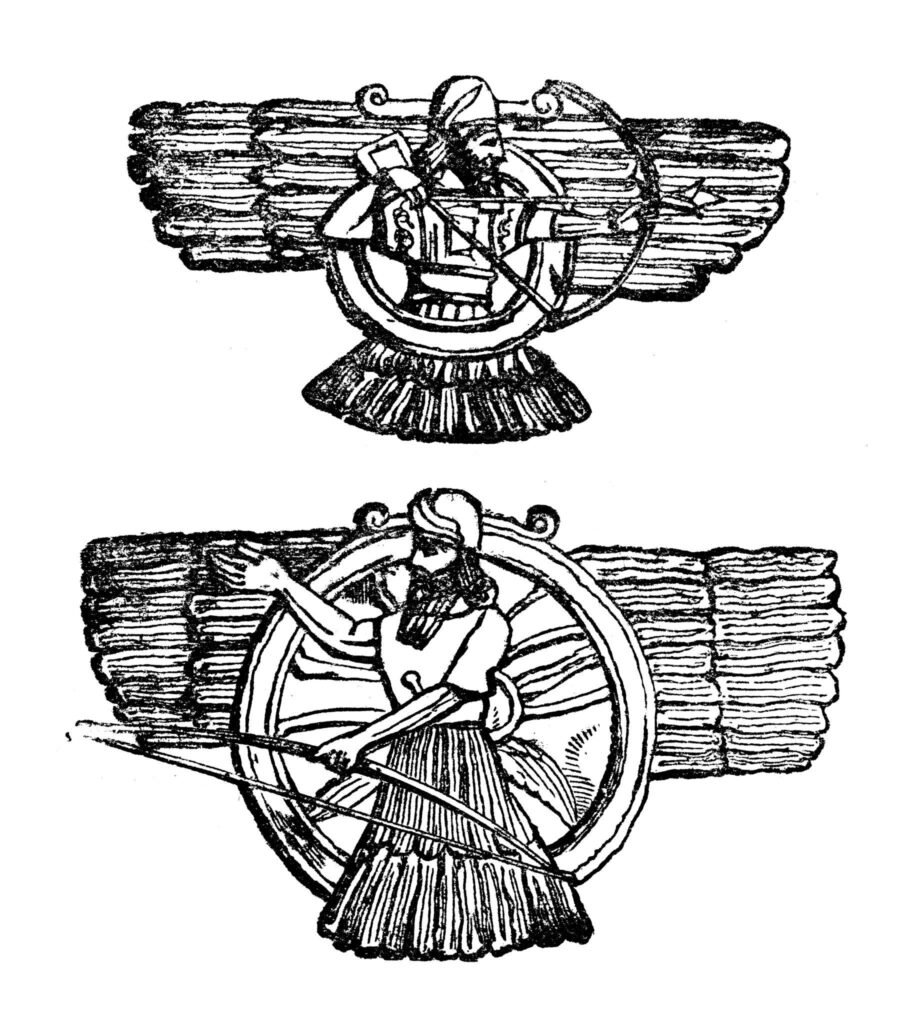
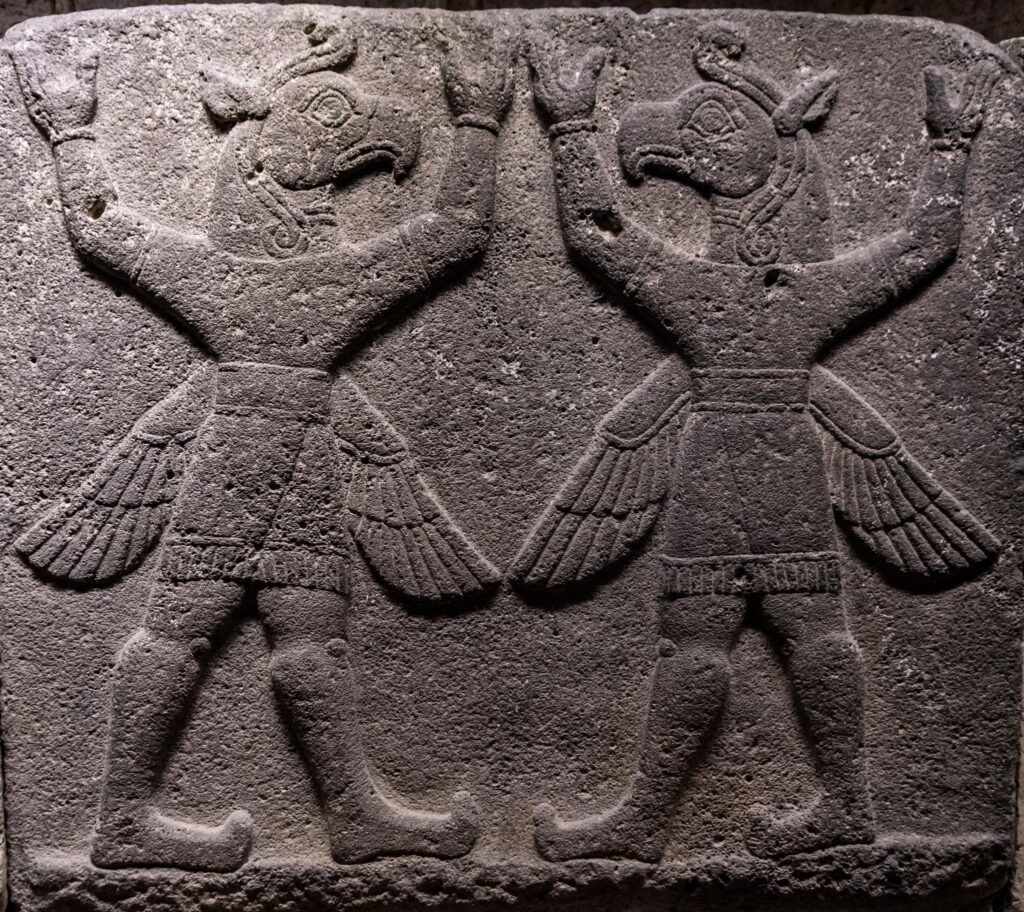
This motif appears as a royal emblem well before 1000 BCE, surfaces in early Greek ivories, and later emerges prominently at Taxila, preserved on punch-marked coins and monuments. From this crossroads of civilisations, the double-headed eagle spread both westward—into the imperial arms of Europe—and eastward into the Indian subcontinent. By the time it appeared in the art and insignia of the Chalukyas, Hoysalas, Kalyani Chalukyas, and finally the Vijayanagara Empire, the symbol had shed its fertility origins and crystallised into a marker of supreme sovereignty, vigilance, and imperial authority. The Ganda Berunda, as India knows it, is thus a civilisational inheritance—refined, indigenised, and weaponised as symbolism.
The Mark of Sovereignty: From Empire to Kingdom
For the Vijayanagara rulers, the Ganda Berunda was not decoration—it was political language. It appeared on coins, seals, and temple reliefs as a declaration of imperial power:
We see everything. We fear nothing.
When Vijayanagara fell, the symbol endured.
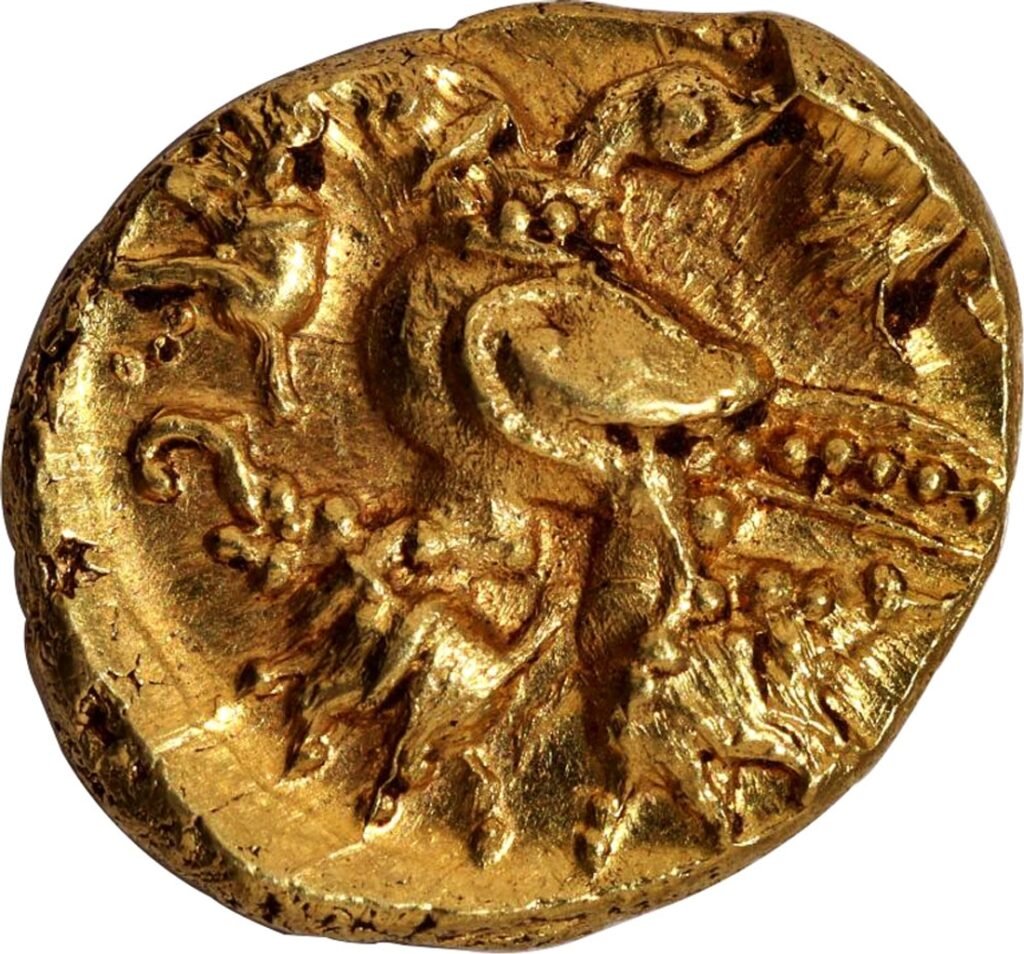
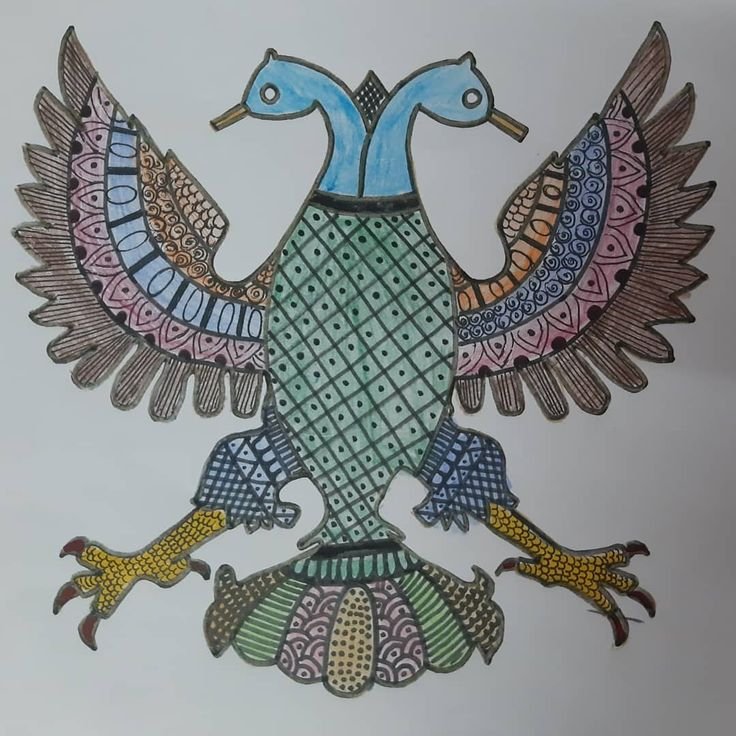
The Kingdom of Mysore, under the Wodeyars, consciously adopted the Ganda Berunda as its royal crest. It adorned palace walls, ceremonial regalia, and state insignia, gradually entering folklore as a guardian of the land itself.
After Independence, when Mysore State was reorganised as Karnataka, the choice of State Emblem was inevitable.
The Ganda Berunda remained.
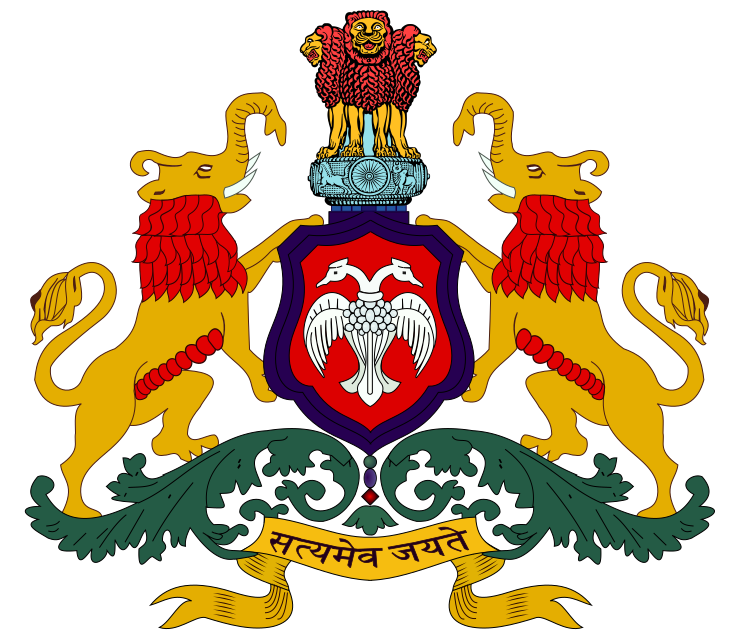
Few symbols anywhere in the world have survived the passage from myth → empire → kingdom → modern republic without losing relevance.
The Military Grit: Haifa, 1918
Now the story shifts from stone to battlefield.
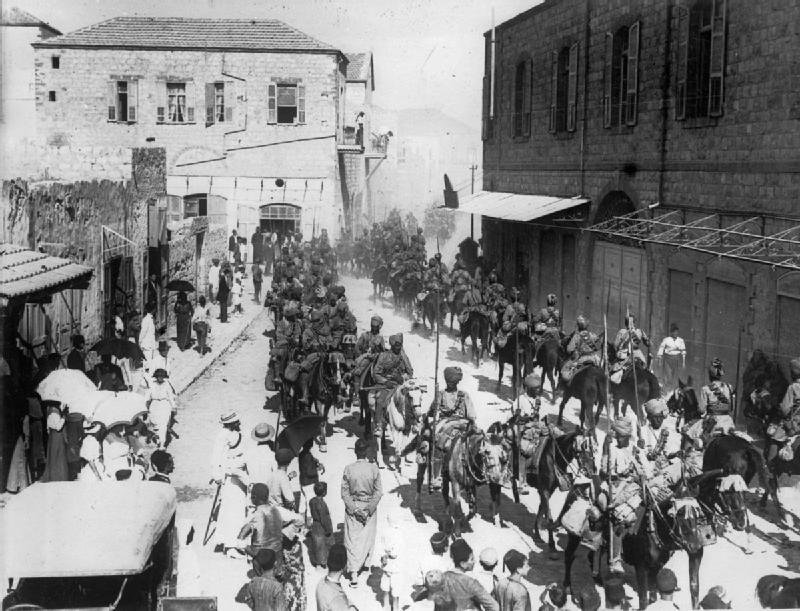
On 23 September 1918, during World War I, the Mysore Lancers—the Maharaja’s personal cavalry—faced Ottoman machine guns and artillery defending the city of Haifa.
Horses and lances versus modern firepower.
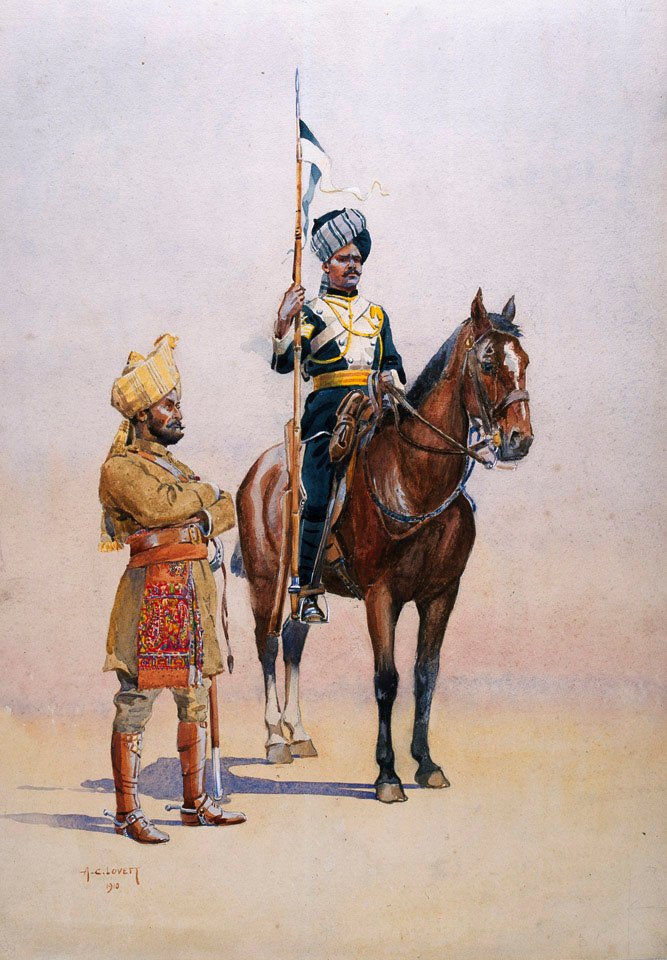
What followed became legend.
While other units attacked frontally, the Mysore Lancers executed a daring flanking manoeuvre, climbing what were believed to be the impassable rocky slopes of Mount Carmel. Emerging behind enemy lines, they silenced Austrian artillery and liberated the city.
It remains one of the last successful cavalry actions against machine guns in modern warfare.
The Modern Legend: Why the Ganda Berunda Rides with Soldiers
After India became a Republic, the Mysore Lancers were amalgamated with other princely cavalry units to form 61st Cavalry in 1953.
When the regiment chose its emblem, it did not look for something new.
It chose something ancient.
The Ganda Berunda—a symbol that had guarded gods, kings, and kingdoms—now rode with soldiers.
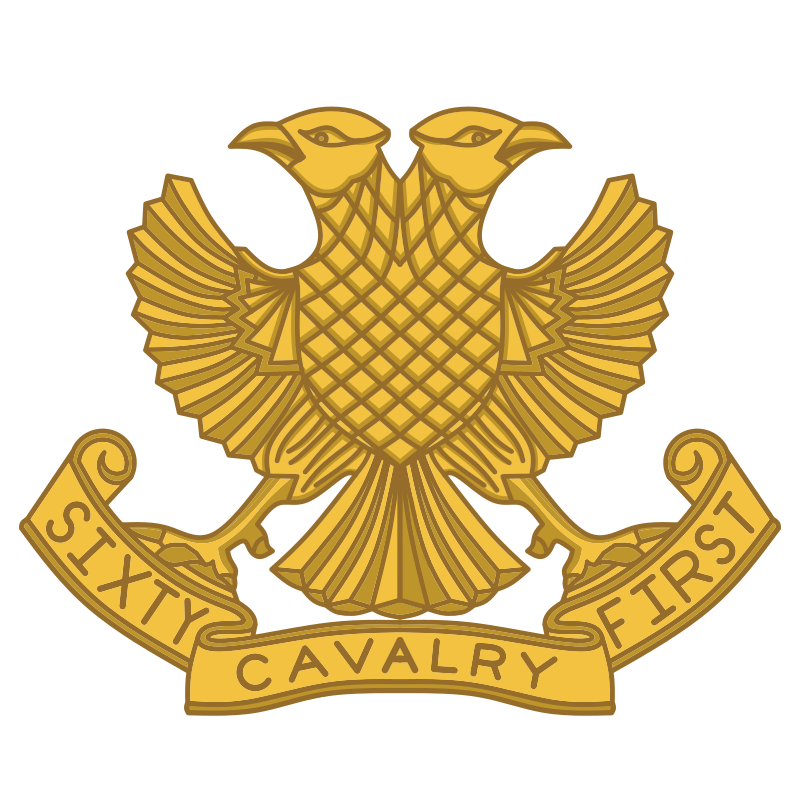
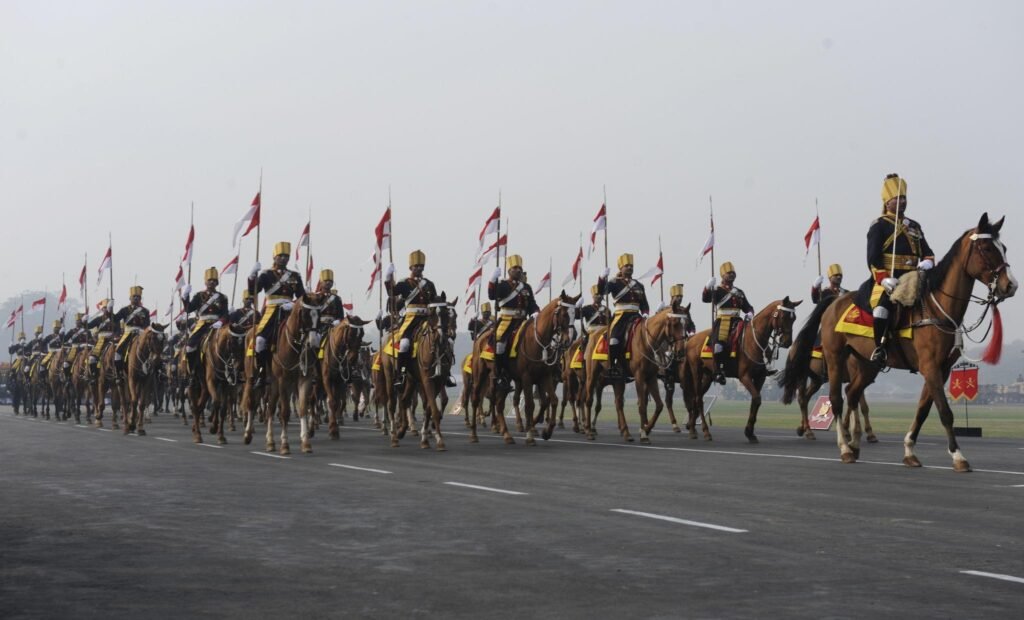
In the 61st Cavalry, the emblem is not ornamental. It is a reminder that a soldier’s vigilance must be two-fold:
- One eye on the past, we inherit
- One eye on the future, we protect
Two heads.
One duty.
The Ganda Berunda is not confined to land forces alone. The Indian Navy has also drawn upon this symbol of Karnataka’s royal heritage. Warships named Mysore have carried the two-headed bird in their crests, and the great naval base at Karwar—INS Kadamba—commemorates the ancient Kadamba dynasty of the same region. Together, they show how a regional emblem of sovereignty has found a place across multiple arms of India’s armed forces.
Sentinels of History
When you see cavalry in ceremonial formation today, you are not merely watching a parade.
You are witnessing a living bridge between ancient stone and modern steel—
a mythical sentinel that has never stopped standing guard.
Some symbols decorate.
This one endures.
Sources & References
- Dr. S. Srikanta Sastri, The Evolution of the Gandabherunda
- Burton Stein, Vijayanagara, Cambridge University Press
- George Michell, Architecture and Art of Southern India
- Mysore Palace royal insignia
- Government of Karnataka – Rajya Chinha (State Emblem) publications
- Military histories of the Battle of Haifa (1918)
- 61st Cavalry (India) – Regimental history, lineage, and traditions (Wikipedia)
- The Armies of India – Maj G F MacMUNN, DSO
Have a story to Share?
If you or someone you know has lived a tough and interesting life in a military academy in India and has interesting experiences/anecdotes to share, we invite you to contribute to Fauji Tales. And if you have a story of your own — big or small — we would be honoured to preserve it.
Thank you for reading this story on Fauji Tales.
If it moved you, inspired you, or reminded you of someone who has worn the uniform with pride, please share it with others.