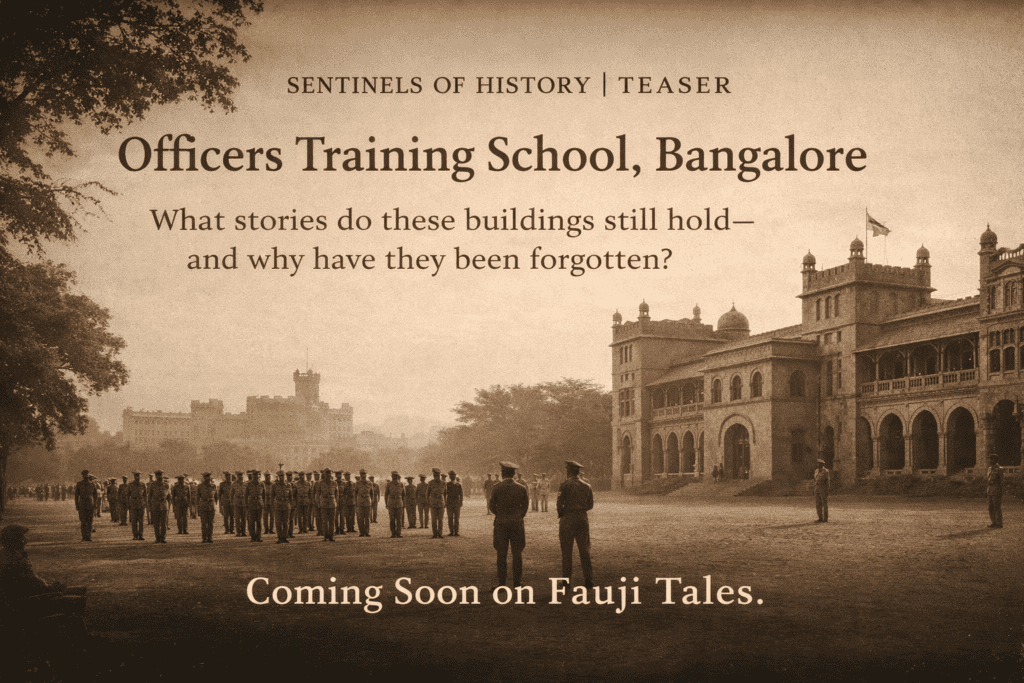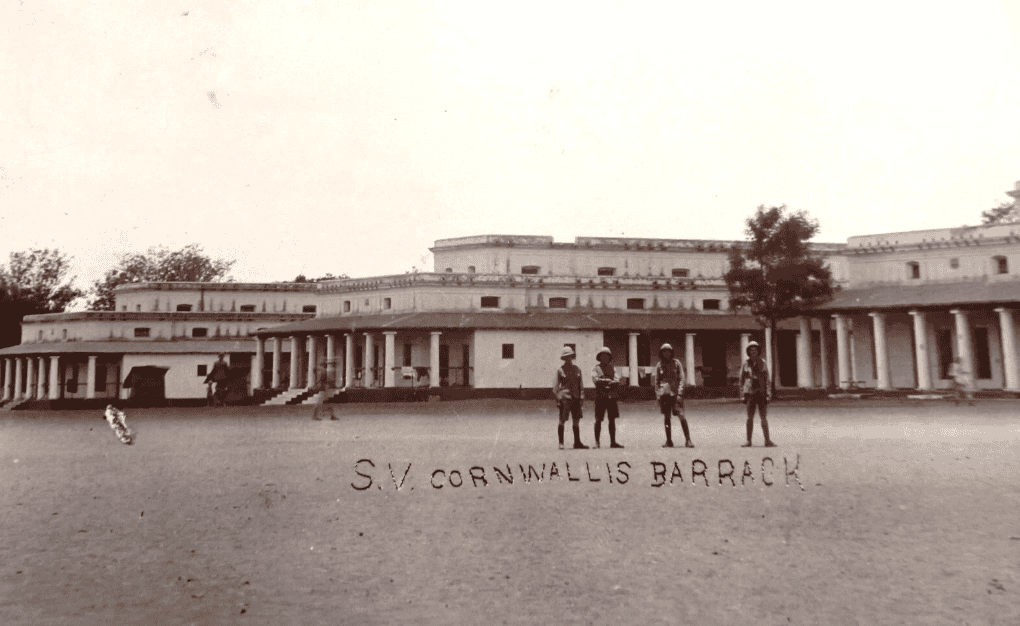
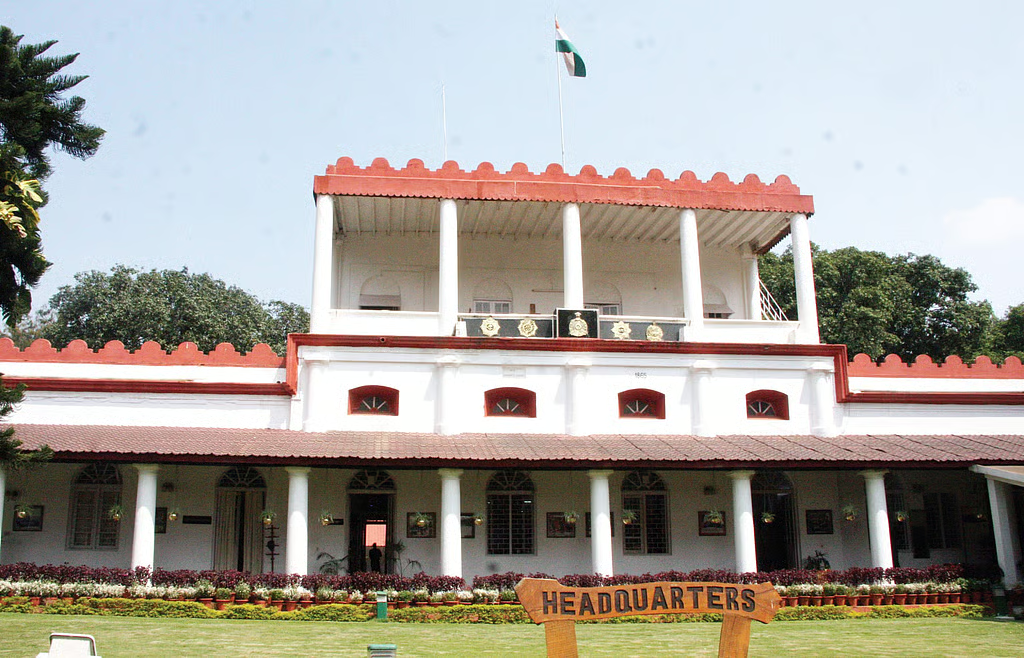
Long before Bangalore became a city of glass towers and cafés, it was a garrison town shaped by parade grounds, cantonments, and military routine. Hidden within what is today the ASC Centre stands one of the city’s most significant—and least remembered—military landmarks: Cornwallis Barracks, once home to the Officers Training School (OTS) Bangalore of the British Indian Army during the Second World War.
Before young officers marched into the jungles of Burma or the hills of the North-East, many of them first learnt command on a quiet parade ground in Bangalore.
Arrival: The Journey Ends, Purpose Begins
For many officer cadets, Bangalore marked the end of a long, uncomfortable journey and the beginning of something purposeful.
“One morning early we pulled into Bangalore and jumped down onto the platform—weary, crumpled, sweaty, but happy. We had arrived.”
— Officer Cadet, OTS Bangalore
After days spent on overcrowded troop trains—often halted for hours in sidings—cadets stepped onto a platform that felt unexpectedly calm. The city greeted them with warmth and order.
“The morning sun was already warm; there were green trees, grass, snug-looking bungalows and luxuriant gardens. After days on the train, it felt as though things were finally coming right.”
— British Officer Cadet
Waiting for them were crackingly smart NCOs, immaculate in khaki drill shirts and shorts, alongside equally smart Indian Army drivers with three-ton trucks lined up for men and baggage alike.
“Several crackingly smart NCOs were waiting for us, immaculate in khaki drill, along with equally smart Indian Army drivers and their trucks lined up ready. The welcome smiles were unmistakable.”
— Officer Cadet, OTS Bangalore
As the convoy drove through Bangalore’s wide, sunlit streets, more than one cadet felt an unexpected sense of familiarity. Dusty roads, neat bungalows, open spaces—it reminded some of places they had known before.
Then came the first sight of the school itself.
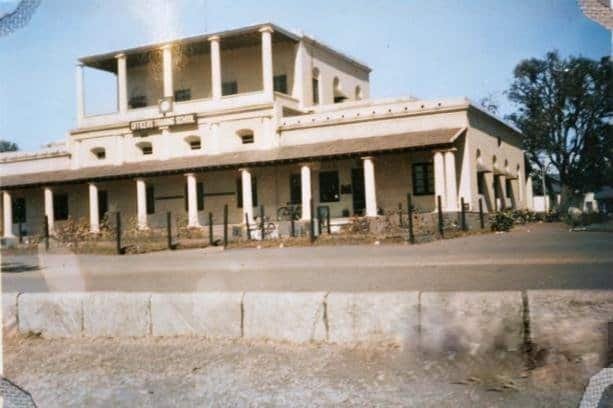
“As we drove past the gleaming whitewashed administrative block of the OTS, with old black cannons outside and blue skies above, we all felt that at long last things were coming right for us.”
— Officer Cadet, Officer Training School Bangalore
Why the Officers Training School Came to Bangalore
The establishment of the Officers Training School was not the result of long-term planning, but rather a wartime necessity. As the Second World War intensified, the British Indian Army expanded at an unprecedented pace, eventually becoming the largest volunteer force in history.
Traditional officer pipelines could not cope. The response was radical: shortened courses, emergency commissions, and accelerated leadership training. Young men—British and Indian—were commissioned earlier than ever before, often with minimal experience but immense responsibility.
Bangalore was an obvious choice. Its temperate climate allowed year-round training; its cantonment infrastructure supported rapid expansion; and its inland location offered security from coastal threat. Within this setting, the Officer Cadet Training Unit (OCTU) was established in the late 1930s and expanded rapidly during the war, evolving into what became widely known as the Officers Training School.
Cornwallis Barracks stood at the heart of this effort.
Six Months to Make an Officer
The OTS course typically lasted six months—a remarkably short time by pre-war standards. The syllabus covered all the usual military subjects, but wartime realities shaped its emphasis.
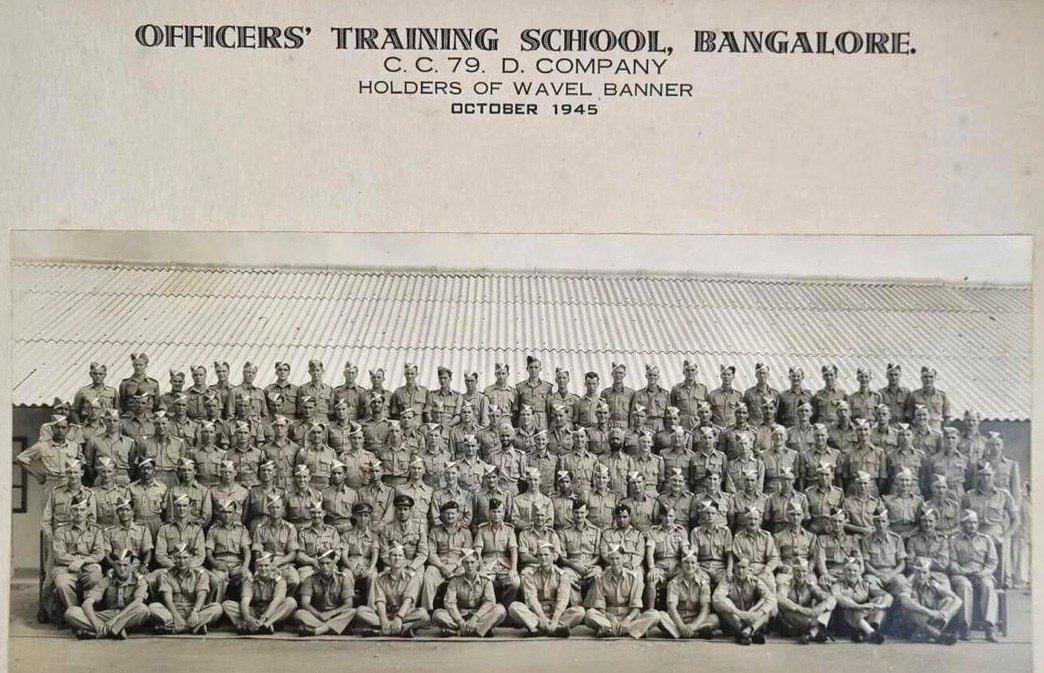
“The course at Bangalore lasted six months and included all the usual subjects, but also training in jungle warfare. Instruction in Urdu was compulsory—it was the language of the Indian Army.”
— British Emergency Commission Officer
Jungle warfare training reflected the growing likelihood that many graduates would be sent to Burma or Southeast Asia. Urdu was not an academic formality; it was essential for command, credibility, and survival.
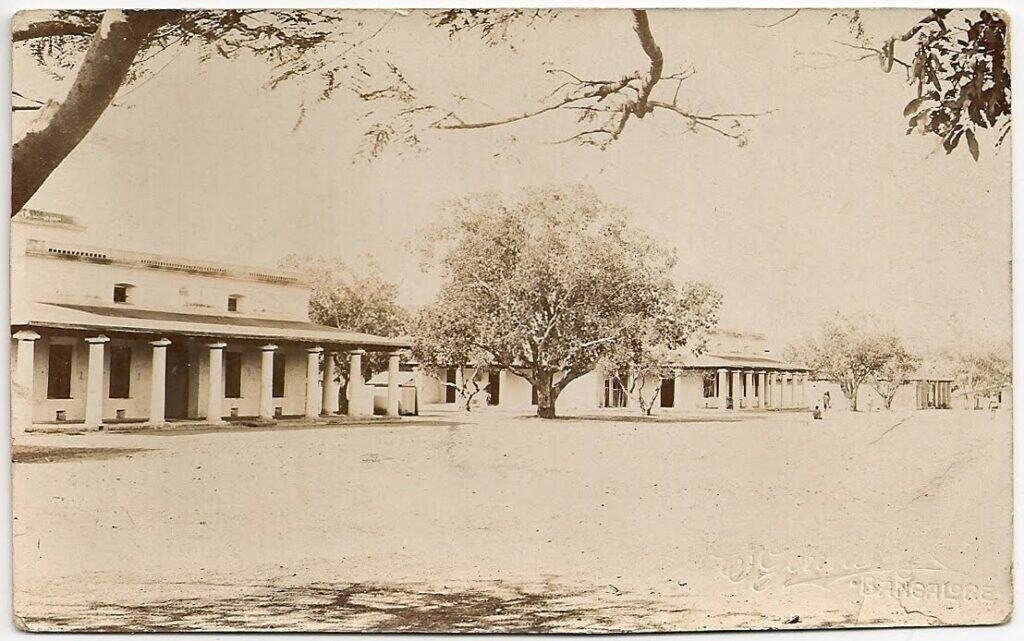
Training days were long, disciplined, and relentless. The contrast between the often scruffy cadets—fresh from weeks of travel—and the immaculate surroundings of the OTS was striking. Arcaded buildings glowed under evening lights. Uniformed servants moved quietly through mess halls. Order prevailed everywhere.
For many, it was the first time they truly felt like officers-in-the-making.
Life Inside the Barracks
British cadet John Foster, who trained at OTS Bangalore, later described life there as “comfortable if busy and strenuous.” The sprawling camp meant cadets moved everywhere by bicycle—but always in formation, using cavalry commands such as “Prepare to mount! Mount!”
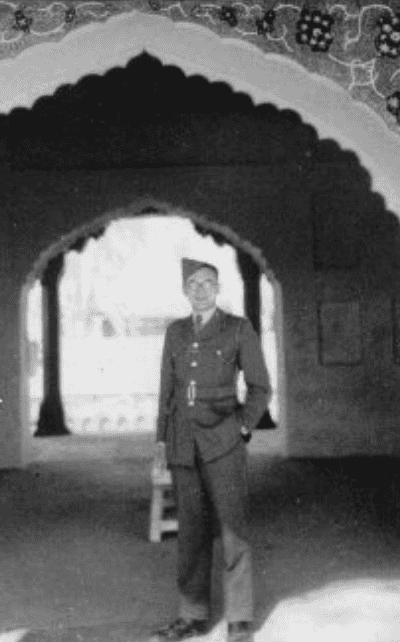
Training was practical and sometimes improvised. Driving lessons took place on wide sandy plains, with five cadets sharing a single military truck. Tactical lectures often focused on frontier warfare—lessons that would soon prove of limited relevance in the jungles of Burma.
Barrack life itself, despite outward order, was basic. Sanitation was primitive, lighting was poor, and encounters with rats or bandicoots were not uncommon. When Foster fell ill with jaundice, there was little treatment beyond rest and patience.
Recovery came slowly, marked by small mercies: a visiting padre, a borrowed book, the first tolerable piece of dry toast.
OTS Bangalore was no ivory tower. It was a place that demanded endurance.
Indian Cadets: Leadership Under Scrutiny
For Indian cadets, the experience carried an additional, unspoken burden. Many were the first commissioned officers from their families. Expectations were high, scrutiny constant, and mistakes less easily forgiven.
Training standards were officially uniform, but Indian Emergency Commissioned Officers later recalled stricter discipline and sharper evaluation. Urdu was not merely useful—it was indispensable. Authority had to be earned quickly, often over men older and more experienced than themselves.
A phrase recurs across regimental histories:
They arrived as boys. They left as platoon commanders.
Regiments, Gurkhas, and the Road Ahead
Subject to good reports, cadets at OTS Bangalore were permitted to state preferences for the regiments in which they wished to serve. For many, this was the first moment when the abstract idea of service became personal.
“The first Gurkhas I met came aboard our ship at Alexandria. They were such a cheerful bunch of lads that I decided if ever I had the opportunity, I would feel privileged to serve with them.”
— Officer Cadet, later attached to the Gurkha Rifles
Such choices mattered. From Bangalore, officers were posted directly into units preparing for combat or occupation duties, often with little time between commissioning and deployment.
From Officers Training School Bangalore to Burma
Among those trained at OTS Bangalore was Lieutenant Karamjeet Singh Judge of the 15th Punjab Regiment. Commissioned at just twenty-one, he would soon be leading men in the Burma Campaign.
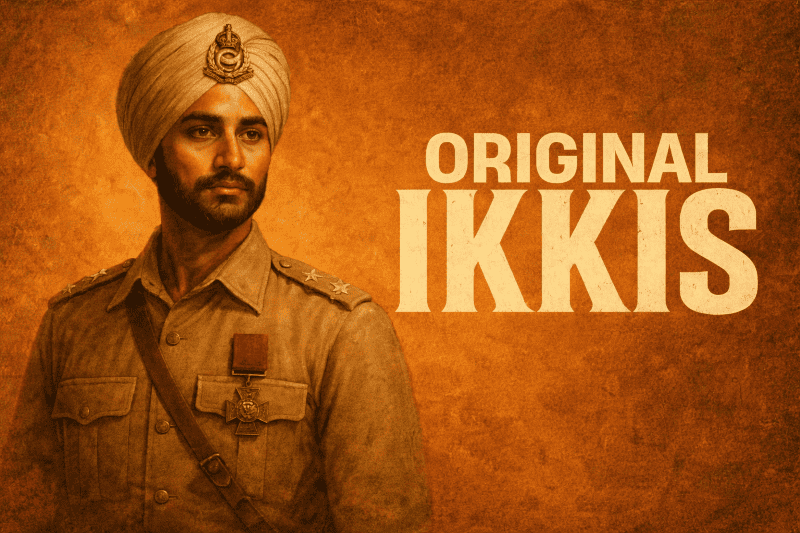
At Myingyan, he repeatedly exposed himself to enemy fire while directing tanks and assaulting Japanese positions. He was killed in action and posthumously awarded the Victoria Cross, becoming the youngest Indian officer to receive the VC during the Second World War.
He was not alone. Officers trained at Cornwallis Barracks fought across Burma, Arakan, Imphal, and Kohima. Some survived to command battalions in independent India. Others were lost within weeks of reaching the front.
Their individual stories differ. Their starting point was the same.
A Sentinel That Still Stands
Today, Cornwallis Barracks remains in service—its walls repainted, its lawns trimmed, its wartime urgency long past. In the ASC Centre, Bangalore, Few who pass through the area realise that these grounds once prepared young men, hurriedly and imperfectly, for a global war whose outcome was far from certain.
The Officers Training School Bangalore did not promise glory.
It promised responsibility.
And for many who passed beneath its arcades, that responsibility led straight from Bangalore to the jungles of Burma.
Sources & Notes
- First-hand memoirs of British OTS cadets, including John Foster
- Personal recollections of British Emergency Commission officers
- Regimental histories of the 15th Punjab Regiment and Gurkha Rifles
- Victoria Cross citation of Lt Karamjeet Singh Judge
- Secondary histories of British Indian Army wartime officer training
Have a story to share?
If you or someone you know has lived a moment of courage, sacrifice, or quiet heroism in uniform, we invite you to contribute to Fauji Tales.
Thank you for reading this story on Fauji Tales.
If it moved you, inspired you, or reminded you of someone who has worn the uniform with pride, please share it with others.